
Contents
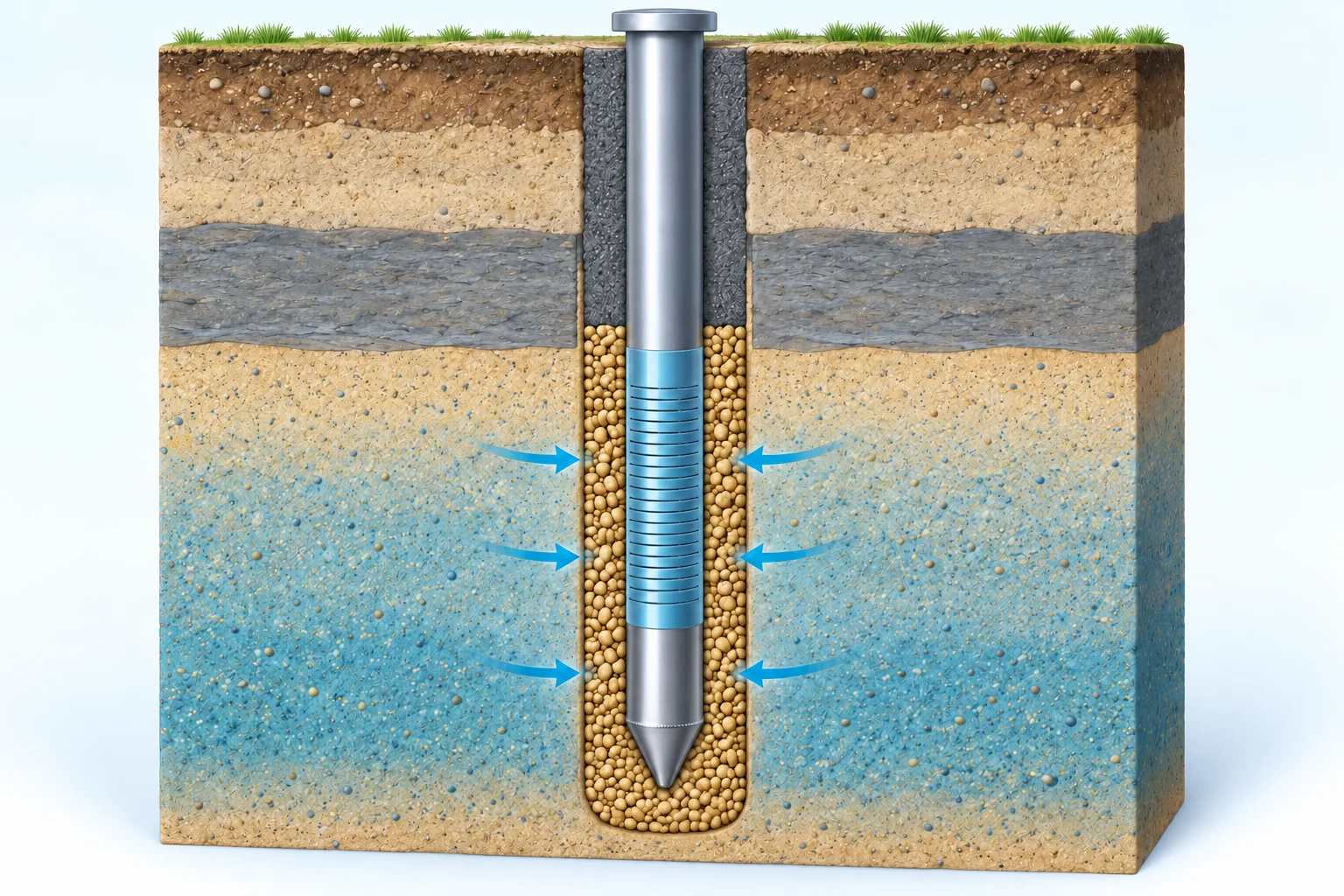
A water well gravel pack is an engineered filter around the screen. Its grading must suit the formation, while the screen opening must retain the selected pack as required by the design. Buying gravel by a familiar trade size and choosing a screen independently can leave a gap between the design on paper and the materials installed underground. [1][2]
The most useful procurement document is a coordinated schedule: formation interval, approved pack grading, screen interval and slot specification, all carrying the same design revision.
Keep formation samples tied to depth
Formation samples are the starting point for pack selection. Their value depends on where they came from and whether they represent the water-bearing interval. A sample described only as “sand from the well” is difficult to use when the borehole crosses several distinct layers. [1]
Ask the drilling team to preserve the sampling depth, collection method and any limitations in the sample. Keep the laboratory sieve results linked to those records. If different intervals have different grain-size distributions, flag that difference for the well designer rather than averaging the results without explanation.
For the purchasing team, the immediate task is document control: make sure the pack supplier, screen supplier and contractor receive the approved interpretation, not separate early versions of the same project.
Specify a grading envelope rather than a nickname
Filter-pack selection considers the relationship between formation grains and pack grains. Published design methods use grain-size distributions, but the applicable method depends on the formation and well design. A single universal multiplier is a poor substitute for that assessment. [1][2]
Translate the approved design into a measurable purchasing requirement. Ask for sieve sizes, the required percentage passing or retained, and the acceptance limits. State the applicable cleanliness and material-quality requirements as well.
For example, if an enquiry uses a local commercial pack name, attach the approved grading table. Invite the supplier to identify any difference between its available material and that table before dispatch. This avoids treating two similarly named products as equivalent without checking their distributions.
Check the delivered material against the approved material
A useful delivery record links each shipment to a batch or lot. The site team can then connect a material certificate or test result to the pack actually placed in the well.
Suggested checks include:
- Matching the delivery identification to the approved order.
- Reviewing the available grading result against the specified envelope.
- Recording visible contamination or discrepancies for investigation.
- Keeping a labelled representative sample where the project procedure requires one.
- Resolving substitutions through the designer before installation.
These are proposed project controls, not a replacement for a project's own sampling and acceptance specification. Their purpose is to make any later investigation traceable.
Treat placement as part of the design
Even suitable material needs an appropriate installation method. Bridging or incomplete placement can interfere with the intended pack around the screen. Development is also part of producing a stable, useful well; screen selection alone cannot correct every construction problem. [1][2][3]
Before work starts, request a placement plan that identifies the intended annular space, delivery method, monitoring method and responsibilities. During installation, keep a running record of quantities placed and measured pack levels. Unexpected differences between expected and recorded quantities should be investigated rather than explained away with an undocumented adjustment.
Centralizers, screen geometry and the contractor's method belong in the same review. The procurement team should ask which accessories are included and which are the contractor's responsibility, without assuming that an accessory list proves successful placement.
Close the loop during development and testing
The completed well should be evaluated through its development and testing programme. Record the pumping rate, water levels, sand observations and the test conditions needed to interpret them. A photograph of apparently clear water cannot replace a defined acceptance test. [1][4]
Keep the final screen drawing, pack delivery records and development log together. If sand production later becomes a concern, these documents make it easier to distinguish an original design question from a material, installation or operating issue.
For the opening specification itself, see OFD's well screen slot-size guide. For purchasing screens and associated components, use the water well RFQ guide.
Send OFD your approved screen schedule and pack grading when discussing screen supply. Clearly mark any design decision that remains open so it can be resolved before a manufacturing specification is agreed.
References
[1] USDA NRCS, National Engineering Handbook, Part 650, Chapter 12: Springs and Wells, February 2021. Source
[2] Roscoe Moss Company, A Guide to Water Well Casing and Screen Selection. Source
[3] Johnson Screens, Stainless Steel Water Well Screens and Accessories. Source
[4] University of Florida IFAS Extension, Water Wells for Florida Irrigation Systems. Source